
Reviewed By Amauriah Davis
⭐⭐⭐⭐⭐
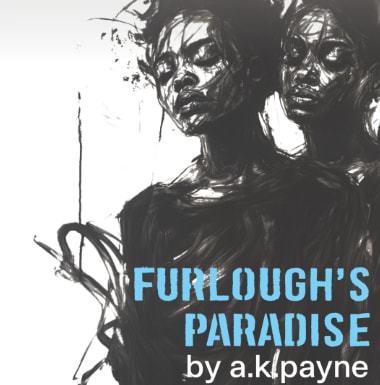
I had no idea what “furlough” even meant coming into this experience, this experience that greeted me with my grandma’s hard butterscotch candy in my seat and, before me, literally the exact layout of my second-cousin’s apartment. Is furlough family? Memory? A revisiting?
a.k. payne, the Pittsburg born playwright, artist-theorist, and theatermaker with an MFA playwrighting degree under Tarell Alvin McCraney (like, hellooo) from Yale School of Drama quite literally dropped a nuclear (family) bomb on my ass. Their writing is poetic, which I always adore, and honest in the kind of way that I think my thoughts, but can’t always articulate in the heat of a moment. Their writing accepts Greek Tragedy and the Hero’s Journey as a concept, but not necessarily as a practice. Being a student of theatre, I can see the formally taught essence of a structure: We start somewhere (tragic), and we end in a different place (, that’s still tragic). But being a student of life, and of Black life, I can see every informal, familial, and loving relationship I’ve had with women. Along the ride, there is no straight path, no linear or obvious road. payne’s structure is a statement within itself: A Black woman’s journey is ineffably and colorfully messy, yet always creates a quilt (or blanket fort, if you will) of armor that is indestructible because of the cyclical interwovenness of her life with your life, with my life, with their life... We cannot be undone. No matter what has, and what will continue to, torment us, we “can’t combust, okay?” Is furlough connectedness? It is protection? Is it a feeling?
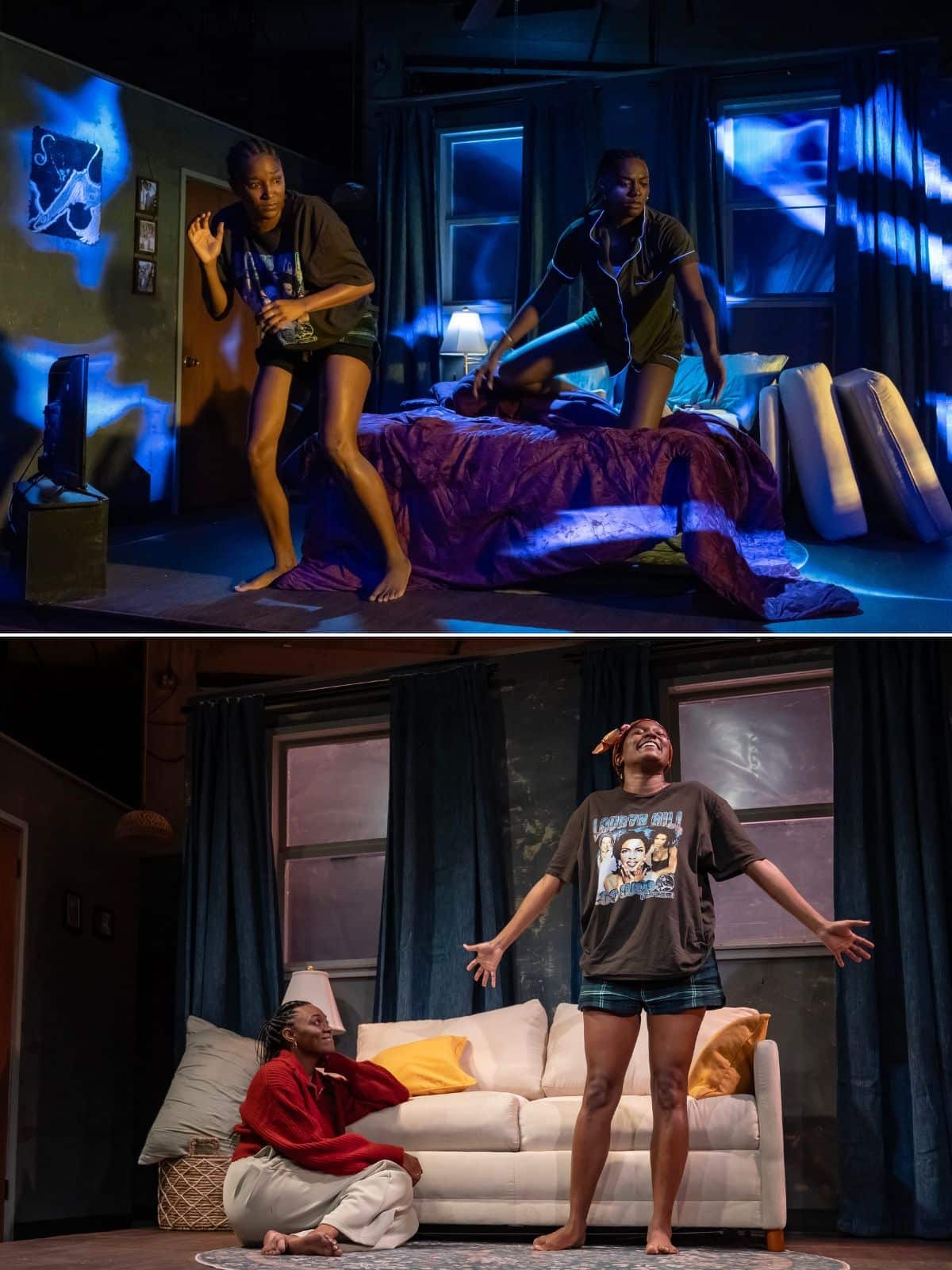
Mina, played by Renea S. Brown, and Sade, played by Hillary Jones, are each other’s only family (sort of). They are cousins who reunite in the Maryland hood they grew up in for the funeral of Sade’s mother. Mina came from the West Coast, graduating from her ivy league, working for Google, and living with her white girlfriend. Sade came from prison, and she has a very long sentence. Isn’t that weird? How prison bulldozes any and every thing else one has done with their life. You don’t immediately think of the love Sade is currently experiencing or what she studied in school. I’m sure you don’t give a gaf about her career goals. She’s in prison with a very long sentence: end of sen— well, know. Miss Renea, I know an anxious girly masking when I see one! Her embodiment of a Black women succeeding in capitalism is a performance to be studied. She reminds me so much of my sister (and myself, too, but I think of Zemirah when I watch Renea), an awkward girl who wants so badly to be taken seriously that she will emotionally suffer to be in the “right” rooms. A woman who does not yet know (or want to know) her full power. Renea’s stuttering and darting eye contact and quiet compassion are just so lovely to watch. Just so real. So many chaotic hidden feelings inside an obedient and polite person. Sade is not obedient or polite, and maybe it’s because she doesn’t mask her anxiety as much as Mina Does. Hillary has just a dominating, cool presence that Sade feels burdened with. Hillary plays being hard, but wanting soft, so poetically. And it’s real, right? Cidney Forkpah, the costume designer, dressed Sade in these conformable boxers and an oversized t-shirt and you know it’s not her usual attire (because she’s coming from prison). And watching her, it’s like we are watching her learn how to be comfortable again, like the clothes have not settle onto her skin just yet. Like she is slowly granting herself permission to be soft again. Both women want to feel their true feelings and have not been given the space to, they are suffering from cognitive dissonance: Mina is a hardcore, Black rights activist living, loving, and working with (aka making comfortable) white capitalists. Sade is a reader and a dreamer of new worlds forced to physically fight for her life everyday in a cage. Can we see how similar they are? Mina can definitely see it. But can we please not ignore how very different the two are? Sade will not let you ignore it. Yes, these women started somewhere similarly, but they were never going to have the same story. Neither one is necessarily more fortunate than the other and payne asks the audience to question what freedom really is. Here, in this Maryland home, the two are free. They can stop working and fighting, and just dream. Here, they are not coming from or going to different places. Here, they are frozen together. Is furlough duality? Is it balance? Is it respite?
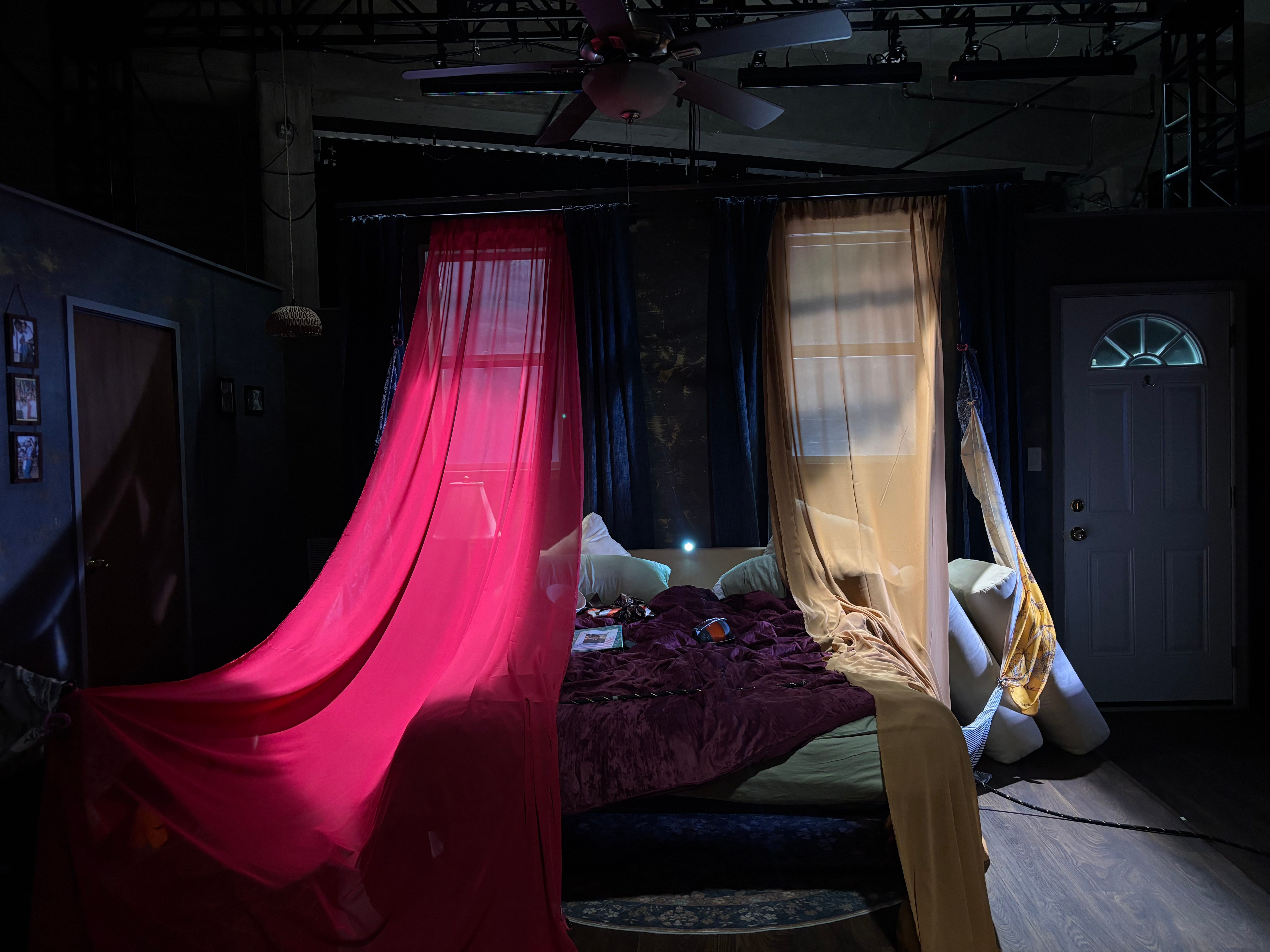
The choreographer (Sandra Holloway), scenic designer (Shartoya Jn. Baptiste), sound designer (Matthew M. Nielson), and lighting designer (Alberto Segarra) lit-chrally worked so well together. THIS IS WHAT I WANNA SEE! I think of the night terror sequences where the actors grow wings and soar through the night sky, before getting tired and falling to their doom, but then hurriedly flap themselves back up, before falling again and repeating the treacherous cycle. Somehow, though I know I am watching a human flap her arms in front of projections, these artists seamlessly bring me into a nightmare, and it is because of the sensory elements creating an atmosphere that I personally know! I have had this nightmare: falling, falling, flying, falling. We connected through something so personal. The femmes I saw the play with all connected to that nightmare. Black women, having all sorts of different reasons, are scared. Let us scream. Let us cry. Let us discuss our individual pain here and now without feeling guilt or shame for having such a pain. Let us discuss so we can heal each other. Let us heal and move forward. Is furlough a moment for connection? Is it a shared nightmare? A shared dream?
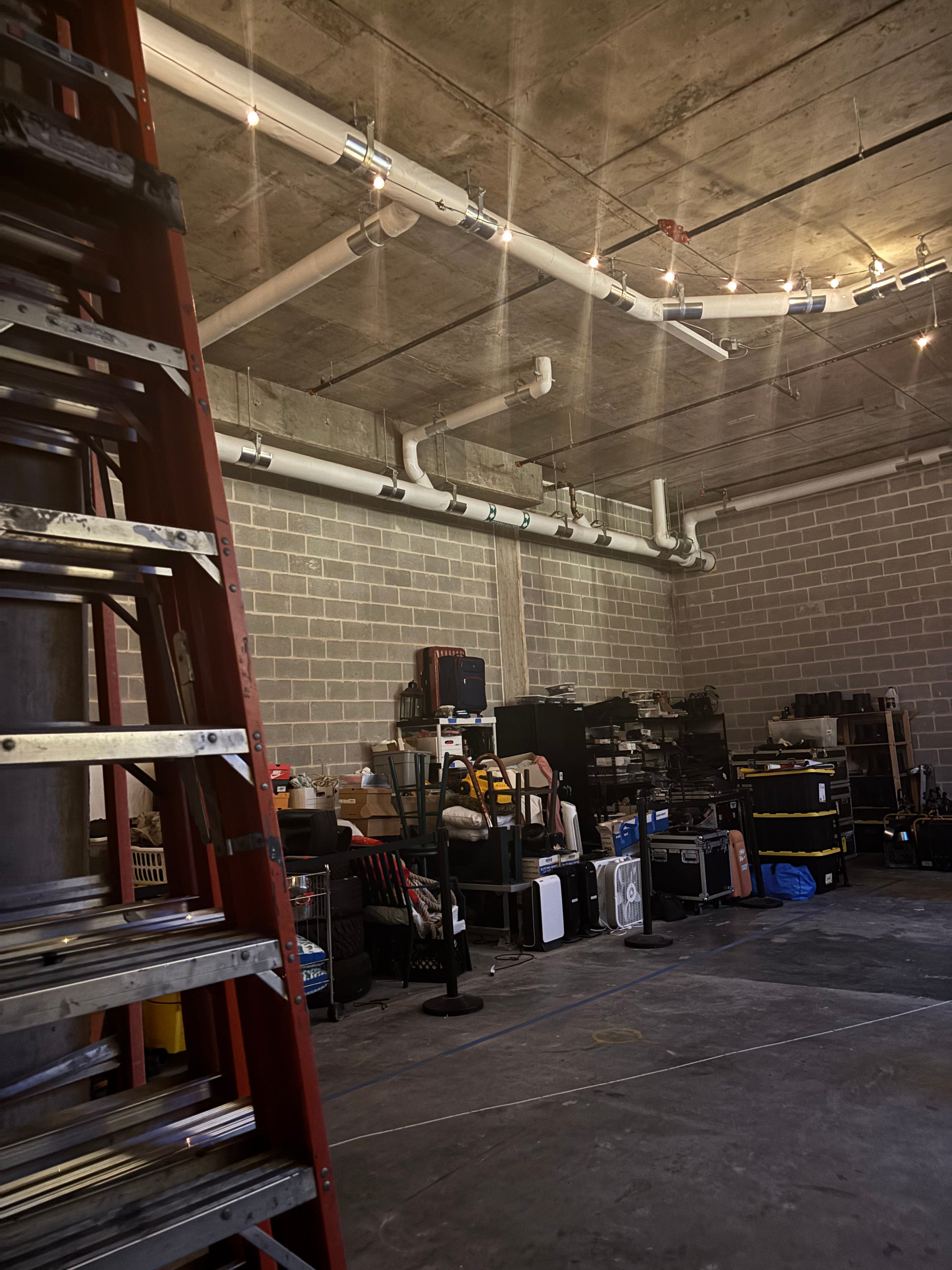
Autumn Angelettie directed Furlough’s Paradise at Theatre Alliance (currently undergoing renovations) and created a Utopia. I kid you not, there are ladders and woodblocks in long open spaces decorated with lights and curtains around a designated stage and Angelettie created a sacred healing ground. There was not a dry eye in the house. I thought I was going to have to imagine harder than I actually did to fall into this story. Of course, though, Black women create magic everywhere we go and the spell put on me that night removed any separation that would make me have to work to understand the story. No, they held a mirror to me. It was lowkey hella ancestral and spiritual and these artists provided a guidebook on healing my sisters and friends and self. Is furlough a suspension of disbelief? Is it a discharge from separation? Is it a chance to unmask? Is it a f*cking break? Furlough feels very simple in general, but abstract for a Black girl, as most things are for us, I suppose.
Go see a.k. payne’s Furlough’s Paradise. It was in Atlanta last year, it’s in D.C. right now, it’s about to be on the West coast. Let’s get this experience everywhere so all my Black girlies can heal a lil bit.
Sidenote: my mother literally works in the prison industry so the fact that I didn’t know what furlough meant is lowkey embarra— girl, anyway.